
Teardowns
Demolition contractor versus excavation contractor: who does what on an Oakville rebuild
- rebuild
- excavation
- builder
Both show up with excavators. Both move a lot of dirt and concrete. So it's fair to wonder why a rebuild often has two separate contractors working the same hole a few weeks apart.
The short version: one takes the old house out of the ground, and the other gets the ground ready for the new one. Here's where that line falls and why it matters.
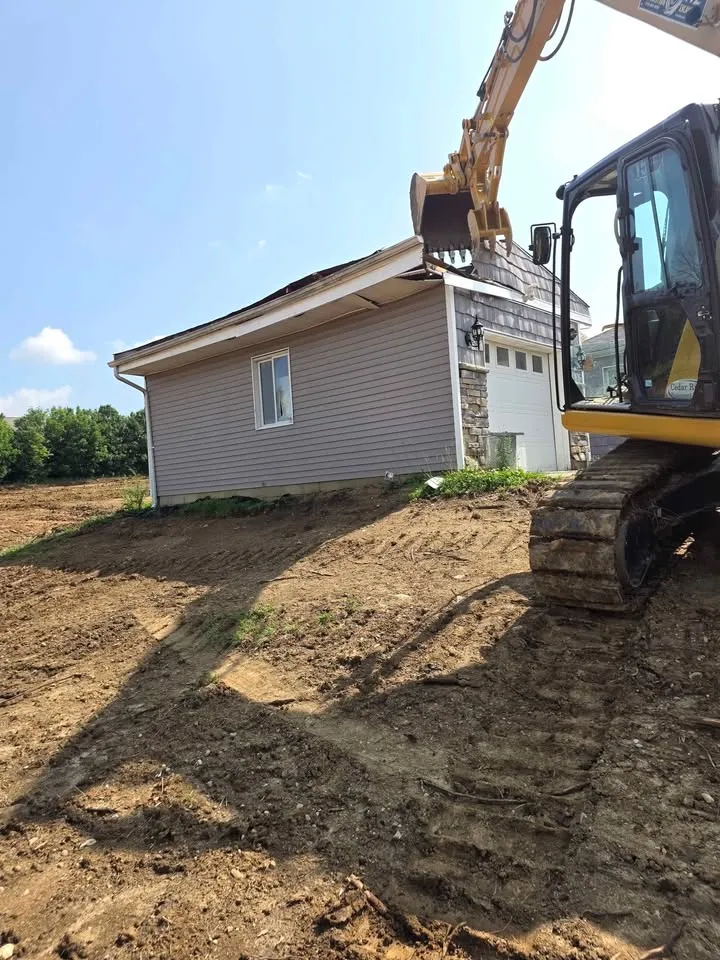
What the demolition contractor delivers
The demolition side is about removal. When it is finished, nothing of the old house should be left on or in the lot unless the scope says so.
- The house, garage and accessory structures taken down.
- Foundation walls, footings and slab broken out and hauled.
- Debris sorted and removed, with metal and clean concrete recycled where possible.
- Rough backfill of the old basement where it is part of the scope.
What the excavation contractor delivers
The excavation side is about building. Its work follows the new house drawings and the engineer's instructions.
- The new excavation dug to the depth and footprint on the plans.
- Shoring where the hole is close to a property line or a neighbouring house.
- Granular base under the new footings and slab.
- Backfill against the new foundation to the engineer's specification.
The handover point
The cleanest handover is a lot with the old foundation gone, the old hole either open and fenced or rough-filled, and the survey pins intact. The excavation contractor needs to know which of those conditions to expect, and the demolition crew needs to know the finish the excavator wants.
Mismatches cause most of the trouble. A rough-filled hole the excavator has to dig out again, or an open hole nobody fenced, wastes time on both sides. Our foundation removal page describes the options.
One company or two
Some rebuilds use one firm for both stages, especially when the new house sits on roughly the same footprint. Others split them because the builder has a regular excavator, the new basement is much deeper, or shoring is involved.
Neither approach is better by default. What matters is that both scopes are written down and the gap between them is covered.
The builder ties it together
On most custom rebuilds, the builder books both trades and sets the order. How that fits into the wider program is covered in our explainer on how a demolition crew works with your builder's schedule.
When to bring in a professional
If you are managing the rebuild yourself without a builder, bring in the engineer and both contractors for a joint conversation before either starts. A short conversation on site agreeing on the handover condition prevents a lot of finger-pointing later.
The bottom line
Demolition clears the past; excavation prepares the future. Bolan Group Demolition Oakville handles the first half through our residential demolition service and hands the lot over in the condition your excavator asks for. Request a free estimate to talk it through.
Frequently asked questions
- Can the demolition contractor dig the new basement too?
- Sometimes. Some firms do both stages, especially when the new house sits on a similar footprint and no shoring is needed. When the new basement is deeper, wider or close to a property line, builders often bring in an excavation contractor who works directly from the engineer's drawings. Ask each contractor what their scope covers before you decide.
- Should the old basement be backfilled before excavation?
- It depends on the gap between the two stages. If the excavator is starting soon, leaving the hole open and fenced avoids digging the same soil twice. If the lot will sit for a while, rough backfill makes it safer and tidier. The builder usually decides, and the choice should be written into the demolition scope.
- Who is responsible for the survey pins?
- Everyone working on the lot should protect them, but the demolition crew is usually first to work near the property lines. A good crew flags the pins before machines move and checks them before handover. If a pin is disturbed, the surveyor resets it before the excavation contractor lays out the new house.
- What does shoring mean on a rebuild?
- Shoring is temporary support that holds back soil at the edge of an excavation, usually where the hole is close to a neighbouring house, a property line or a road. It belongs to the excavation stage and is designed by an engineer. Demolition work generally removes the old foundation without needing shoring of its own.