
Planning
Easements and utility rights-of-way on an Oakville lot: what the demolition crew must avoid
- easements
- survey
- teardown
Most people buy a lot thinking the whole thing is theirs to use. Legally it is, mostly. But tucked into the survey there are often strips of land that somebody else has the right to reach, dig up or drive across, and those strips don't disappear just because the house is coming down.
For a demolition crew, an easement is a line on the ground that changes where the excavator sits, where debris goes and which way the trucks turn. Here's what to look for and why it matters.
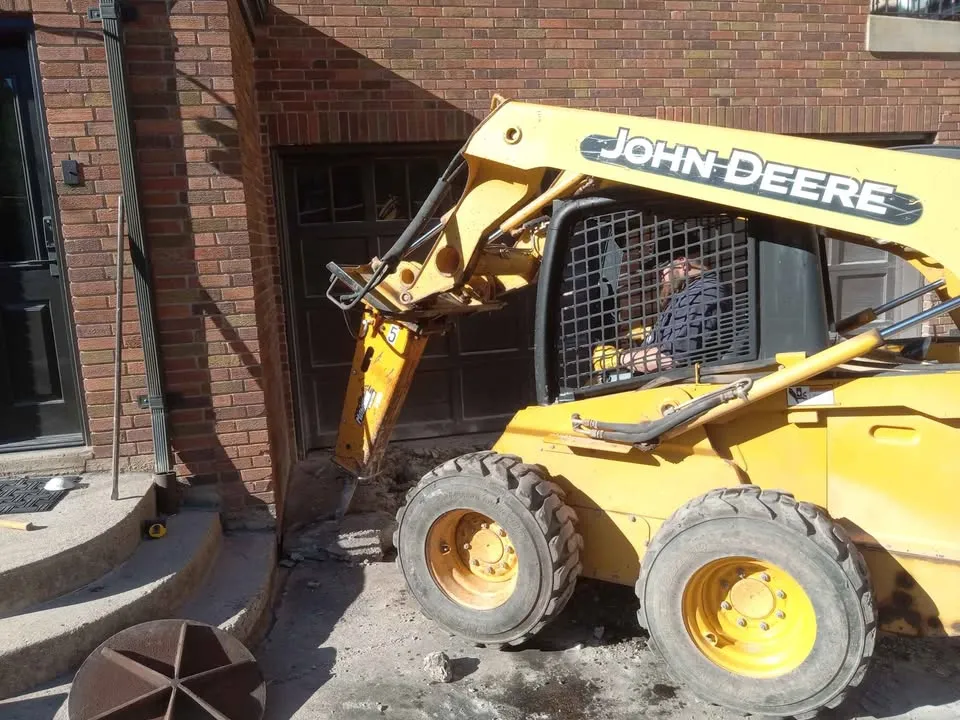
What shows on the survey
A current survey or the title documents usually show any registered interests on the property. The common ones on Oakville lots include:
- Rear-yard storm or sanitary sewer easements running behind a row of houses.
- Hydro easements for overhead or buried electrical lines.
- Halton Region watermain easements crossing a side or back yard.
- Shared driveway rights-of-way between neighbouring lots.
Why they matter to a machine
Buried pipes and cables in an easement are often shallower or more fragile than people expect. A loaded excavator tracking over a sewer easement, or a pile of broken concrete left sitting on a watermain, can crack a line that serves the whole street.
The practical rule is simple: no structures, no stockpiles and no heavy tracking on an easement unless the holder has approved it.
Locates before anything moves
Ontario One Call arranges for utilities to mark their public lines before digging. That covers the main services, but not everything on a private lot.
- Public locates through Ontario One Call for gas, hydro, water, sewer and telecom.
- Private locates for lines the owner installed, such as a feed to a detached garage, yard lighting or irrigation.
- Easement lines from the survey marked on site so the operator can see them.
A shared driveway or lane during demolition
When a driveway is shared, the neighbour usually has a right to use it throughout the job. That means trucks cannot block it, bins cannot sit on it, and any damage has to be repaired. Talking to the neighbour before the start date, and agreeing on times when loading will cross the lane, avoids most problems.
What to check before buying a teardown lot
An easement can limit the new house as much as the demolition. Before you commit to a lot, it is worth knowing:
- Which easements are registered and who holds each one.
- Whether any cross the area where the new house or pool would go.
- Whether a shared driveway will stay shared after the rebuild.
When to bring in a professional
Your real estate lawyer and surveyor should explain what is registered on the title and where it sits on the ground. Bring the demolition contractor in once you know, so the site plan works around those lines from the first site walk rather than discovering them with a bucket.
Working around what isn't yours
Easements are easy to overlook until a machine is sitting on one. Bolan Group Demolition Oakville marks them at the site walk and plans every residential demolition and site clearing job to keep equipment and debris off them. Request a free estimate and bring your survey along.
Frequently asked questions
- How do I find out if my lot has an easement?
- Check your survey and the title documents from your purchase, or ask your real estate lawyer. Registered easements and rights-of-way are recorded against the property and usually drawn on the survey. If the survey is old, a surveyor can confirm what is registered today and show where each easement lies on the ground.
- Can debris be piled on a sewer easement for a day or two?
- It should not be, unless the easement holder has agreed. Heavy piles of concrete or brick can press on a buried pipe and crack it, and the holder may need access at any time. Debris is staged elsewhere on the lot and loaded out regularly so the easement stays clear.
- Does Ontario One Call locate everything on my property?
- No. Ontario One Call arranges locates for public utility lines. Private lines that the owner installed, such as power to a garage, yard lighting or irrigation, are not included. A private locate service can mark those, which is worth doing before any digging or breaking starts on a teardown lot.
- What happens to a shared driveway during a teardown?
- The neighbour's right to use it continues. The crew keeps it clear of bins and parked trucks, protects the surface where equipment crosses, and times loading so the neighbour can still come and go. Agreeing on a plan with them before work begins keeps things friendly.