
Teardowns
Removing an indoor pool during an Oakville teardown or renovation
- indoor pool
- renovation
- pool removal
An indoor pool feels like the height of luxury when a house is built. Decades later, it is often the room nobody uses, the one with the biggest heating bill and the most mysterious equipment in the basement.
Whether the whole house is coming down or the pool room is becoming living space, the pool has to come out in a certain order. Here's how that works.
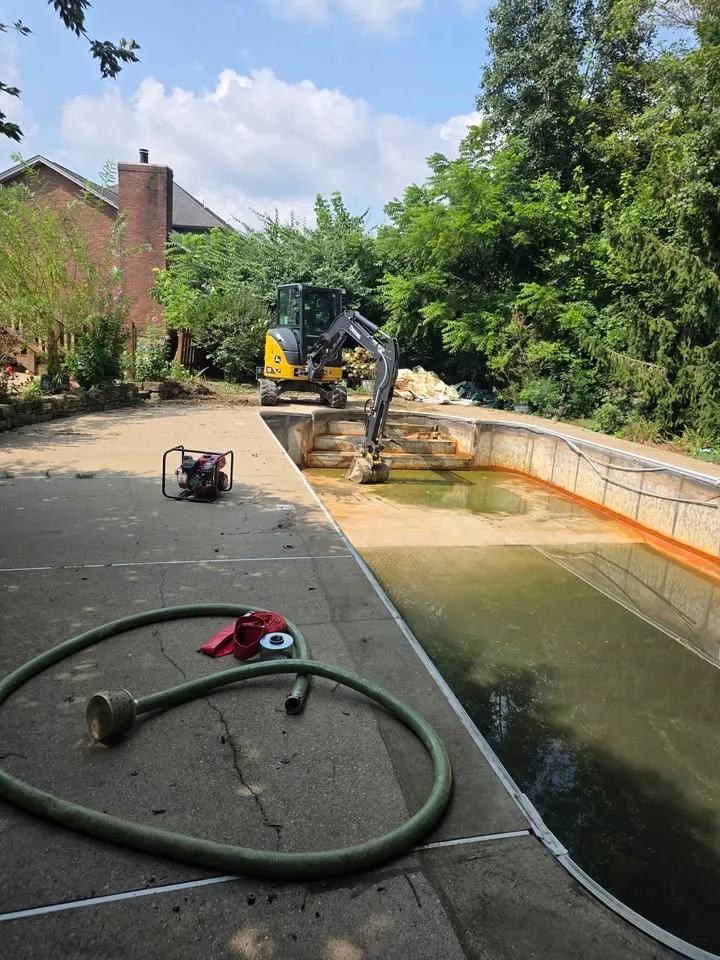
Why indoor pools come out
Most indoor pool removals fall into one of two situations:
- The house is being torn down for a rebuild, and the pool goes with it.
- The house stays, and the pool room is converted into a family room, gym, bedroom or garage.
The pool room's mechanical systems
Indoor pools come with a lot of equipment, and each piece belongs to a trade:
- Dehumidification and ventilation units that control moisture in the room.
- Pool heaters, often gas-fired, which a licensed gas technician must cap.
- Pumps, filters and lighting, disconnected by the electrician.
- Chemical storage, which the owner clears out before work starts.
Draining the pool
Pool water is drained the way the Town of Oakville and Halton Region allow, which in general terms means letting chemicals dissipate and draining in a controlled way rather than into a storm sewer. Indoors, the drain route may run through the house's own plumbing, so a plumber may be involved in deciding where it goes.
Inside a standing house or during a teardown
During a teardown, the pool shell is broken out with the rest of the foundation using an excavator, and the work is much like an outdoor pool removal.
Inside a house that stays, the job is slower. The shell is broken with hand tools and small equipment, and debris is carried out through a door or opening. Dust barriers protect the rest of the house, and the approach is closer to our interior demolition work. Heavy concrete handling is covered on our concrete removal page.
The slab or new structural floor
Once the shell is out, the pool area either gets backfilled and a new slab poured, or a new structural floor is framed across the opening. An engineer should decide which, based on what the room will be used for and what the surrounding foundation can carry.
Moisture damage in the surrounding structure
Years of warm, wet air can take a toll on the walls, ceiling and framing around an indoor pool. When finishes come off, the crew often finds staining, rot or corrosion that was hidden. That is reported to the owner and engineer so it can be repaired as part of the renovation.
When to bring in a professional
From the start. Indoor pool removal involves gas, electrical, plumbing and structural decisions, and often a permit from Town of Oakville Building Services if the floor or structure changes. Get the engineer and trades lined up before the demolition crew is scheduled.
Reclaiming the room
An indoor pool can be turned into useful space, or removed cleanly ahead of a rebuild. Bolan Group Demolition Oakville plans the order with your trades and engineer so the shell comes out safely. Request a free estimate to walk through the pool room with us.
Frequently asked questions
- Can an indoor pool be filled in instead of removed?
- Sometimes, but it depends on what the room will become. Filling the shell and pouring a slab over it may work for some uses, while others need the shell removed so a proper floor can be built. The engineer decides based on loads, drainage and moisture, and the permit drawings reflect that choice.
- Who disconnects the pool heater?
- If it is gas-fired, a licensed gas technician caps the gas line. The electrician disconnects the electrical supply to the heater, pumps and controls. The demolition crew does not touch either service, and removal of the equipment starts only after both trades have made it safe.
- Is removing an indoor pool messy for the rest of the house?
- It can be, which is why dust barriers and floor protection go up before the shell is broken. Debris is carried out along a protected path, and the work area is cleaned daily. In a teardown, this is less of a concern because the whole house is coming down anyway.
- What if the walls around the pool are rotten?
- That is common with older indoor pools, where years of humidity affect the surrounding framing and finishes. The crew reports what it finds as the walls are opened, and the engineer and contractor decide what needs replacing. Finding it during demolition is far better than finding it after the new room is finished.