
Teardowns
Teardown demolition on a Bronte or Old Oakville lakefront lot
- lakefront
- teardown
- Conservation Halton
A lakefront lot is the dream version of an Oakville rebuild. You get the water, the light and a view nobody can build in front of. You also get a shoreline that is watched closely, a lot shape that fights equipment, and wind that carries dust further than you'd think.
None of that makes a lakefront teardown unusual in principle. It just shifts where the care goes. Here's what's different when the backyard ends at Lake Ontario.
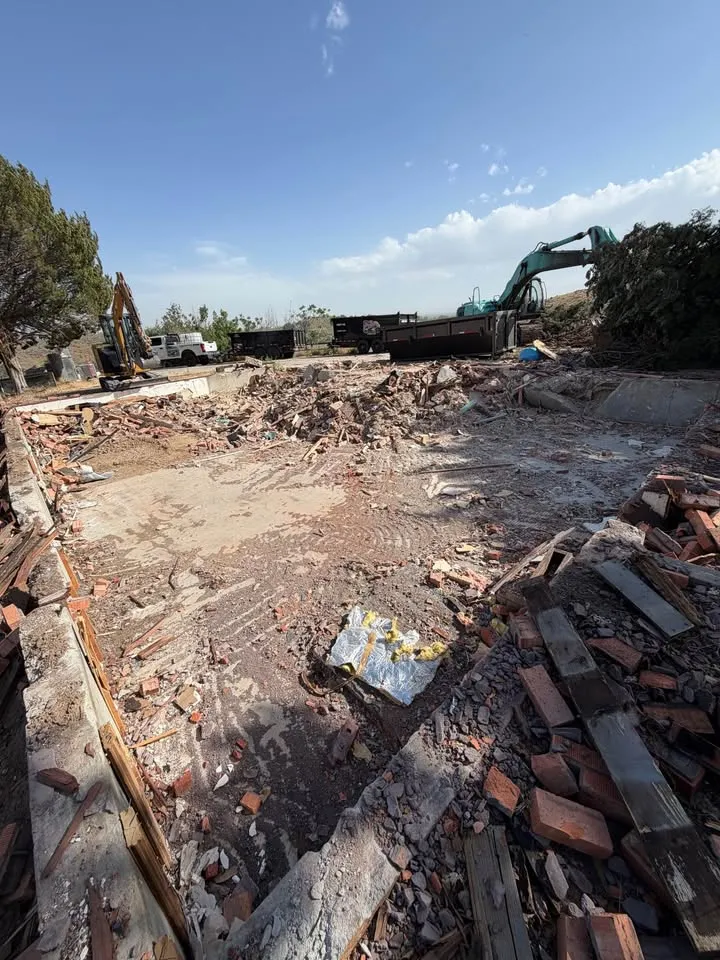
The shoreline is regulated
The Lake Ontario shoreline through Bronte and Old Oakville falls within Conservation Halton's regulated area. A teardown and rebuild on these lots may need Conservation Halton clearance alongside the Town's permits. Our guide on Conservation Halton and Oakville teardowns explains how to check and when the review happens.
Long lots, narrow frontages
Many lakefront lots are narrow at the street and deep toward the water. That shape means the house often sits back from the road, and the machine has to work at the far end of a long driveway.
- The excavator is positioned on the street side of the house, working toward itself.
- Trucks load at the front, and debris travels the length of the lot to reach them.
- Side yards are tight, so neighbours' fences need attention on both sides.
Off the bluff, off the edge, out of the water
The water side of the lot is where the most care goes. Equipment and stockpiles stay well back from any bluff or shoreline edge, and nothing is dumped or pushed toward the lake.
- Silt fence runs between the work area and the shoreline.
- No fill is placed in the regulated area without approval.
- Existing shoreline protection is left untouched unless it is part of an approved plan.
Wind off the lake
Lake wind picks up dust from broken masonry and plaster and carries it along the shore. Water is used to keep dust down while the house comes apart, and work is paused or adjusted when wind blows straight toward neighbouring homes. Loose material is gathered and covered at the end of each day.
Access lanes and neighbours on both sides
Some lakefront homes are reached by a shared lane or a narrow private road. Trucks have to use it without blocking other owners, and the surface needs protecting where equipment crosses. Neighbours on both sides are told about the start date, and working hours follow the Town's Noise By-law.
What the designer needs left in place
The architect and engineer for the new house often rely on existing conditions. Before demolition, confirm what they need kept.
- Survey pins and any benchmarks set for the new design.
- Existing retaining or shoreline walls that the new plan depends on.
- The shoreline itself, left exactly as it was.
When to bring in a professional
Bring your designer, your builder and your demolition contractor to the lot together before anything is booked. On a shoreline lot, a single conversation about the regulated area, the lot shape and what stays saves weeks of back and forth later.
Wrapping up
Lakefront teardowns reward patience at the water side. Bolan Group Demolition Oakville handles them through our residential demolition service, with site clearing where the lot needs it. Request a free estimate to start with a site walk.
Frequently asked questions
- Does every lakefront lot in Oakville need Conservation Halton approval?
- Not automatically, but lots along the Lake Ontario shoreline commonly fall within Conservation Halton's regulated area. If yours does, the demolition and rebuild may need their clearance or permit alongside the Town's. Conservation Halton's mapping and staff can confirm the status of a specific property before you plan the work.
- How is dust controlled on a windy lakefront site?
- The crew wets down masonry, plaster and debris as the house comes apart, and adjusts or pauses work when strong wind blows toward neighbouring homes. Loose material is gathered and covered at the end of each day. On an exposed shoreline, dust control is a constant part of the job rather than an afterthought.
- Can existing shoreline walls be removed with the house?
- Only if an approved plan says so. Shoreline protection is part of the regulated area and often matters to the design of the new house. Unless your designer and Conservation Halton have agreed on changes, the safest approach is to leave the shoreline and any walls along it exactly as they are.
- Why does the machine work from the street side?
- On a long, narrow lot that ends at the water, working from the front keeps equipment and debris away from the shoreline. The excavator pulls the house toward itself, trucks load at the street, and nothing is pushed toward the lake. It also keeps the heaviest activity on the most stable part of the lot.