Permits and rules
What changes if the property is in an Oakville heritage conservation district?
- heritage
- Old Oakville
- demolition permit
If a property is in one of Oakville's heritage conservation districts, or is individually designated, you need heritage approval from the town before a demolition permit can be issued. For a property listed on the heritage register but not designated, the owner must give the town notice before demolishing, which gives council time to consider designation.
In practice, heritage status adds a review step, and sometimes a very different outcome from the one the owner expected. Here is what changes.
Designated, listed and district properties
Heritage status in Ontario comes in a few forms under the Ontario Heritage Act:
- Individually designated properties, under Part IV of the Act.
- Properties inside a heritage conservation district, under Part V. Oakville's districts include Old Oakville, First and Second Street, Trafalgar Road and Downtown Oakville.
- Listed properties, which are on the municipal register but not designated.
What approval involves
For designated and district properties, demolition or removal of a building needs heritage approval. The town reviews the application against the district plan or the reasons for designation, and heritage staff and the heritage committee may be involved before council decides. Applications usually need a heritage impact assessment and drawings of what will replace the building.
For listed properties, the owner must give council written notice before demolition. That notice period exists so council can decide whether to designate the property.
How it affects the work itself
Even when a full demolition is approved, a heritage review can require that certain features are kept, salvaged or documented first. In some cases a rear addition or outbuilding is approved for removal while the main house stays. That turns a teardown into selective or structural work, done carefully around what is being kept.
Salvage and documentation
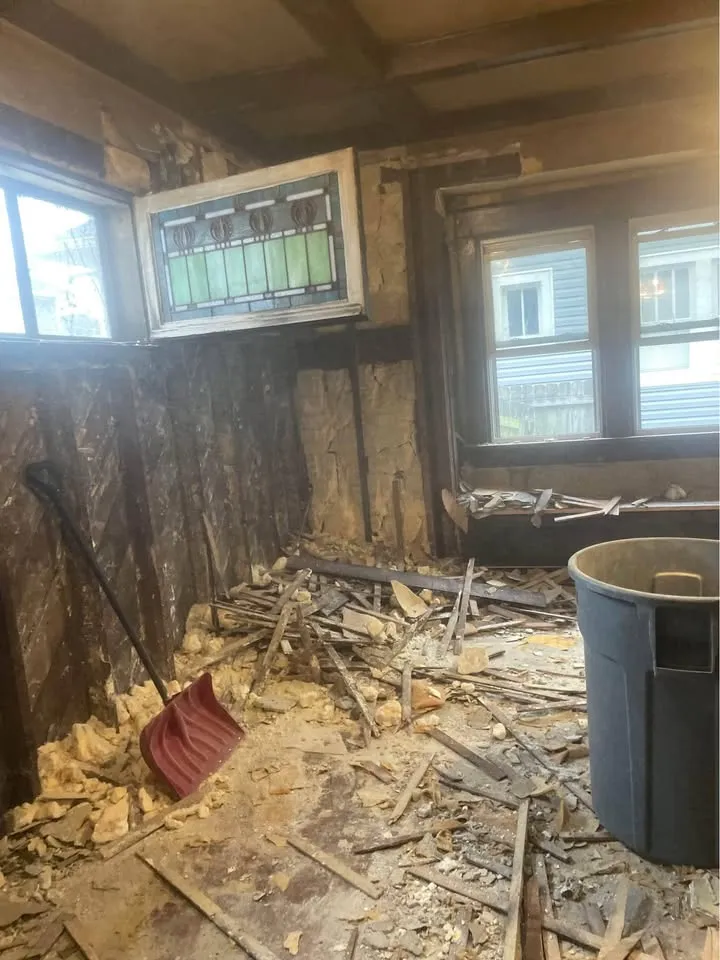
Where heritage approval allows removal, the town may still ask for features to be documented or salvaged first. That can include photographs and measured drawings, and the careful removal of items such as stained glass, mantels, doors, brackets or original trim. These are taken out by hand before any general demolition begins and stored where the owner directs.
Salvage is worth considering even when it is not required. Older Oakville homes often contain materials that are hard to find today, and a new house can reuse some of them. It is much easier to plan this before demolition than to try to recover pieces once the crew is working.
What it depends on
It depends on the property's exact status, the district plan that applies, what is proposed to replace it, and the condition of the existing building. The town's heritage planning staff can confirm a property's status, and it is worth asking before you buy or design.
What we do about it
We do not start until heritage approval and the demolition permit are both in place. Where features are to be kept or salvaged, we remove them by hand first and protect what stays. Our structural demolition and interior demolition crews are used to working around parts of a building that must remain. When your approvals are moving, request a free estimate.
Frequently asked questions
- How do I know if my Oakville house has heritage status?
- Check the town's heritage register or ask heritage planning staff. Status can be designated, inside a conservation district, or listed.
- Can a listed house be demolished?
- The owner must first give council written notice. Council may then choose to designate the property, which would require heritage approval.
- Can I remove a garage on a heritage property?
- Possibly, but outbuildings on designated or district properties can also need heritage approval. Confirm with the town first.
- Does heritage status affect interior work?
- District and designation rules usually focus on exterior features. Interior work may be affected if interior features are named in the designation.