
Teardowns
Protecting the Neighbours' Property During a Teardown
- neighbours
- teardown
- site safety
On a typical Oakville street, the house next door can be just a few metres away. When your house comes down, your neighbours are going to notice, and it's natural for them to worry about their fence, their trees, their car and their peace and quiet.
A bit of planning takes care of most of it. Here's what protecting the neighbours actually looks like.
Talk to them first
Before any machine arrives, let the houses on either side and across the street know what's happening. Share the rough dates, the loudest days and a phone number. People are far more patient when they know what to expect.
If the neighbours have particular concerns, like a basement close to the lot line, a pool, or a car they park beside the driveway, it helps to hear about them early. Your contractor can often adjust where the bin goes, which side the machine works from or when the loudest work happens.
Fences, walls and driveways
Along the property lines, a careful crew will:
Photographs taken before work starts protect everyone. If there's a question later about a crack in a wall or a leaning fence post, a dated photo answers it quickly. It's a small step that saves a lot of awkward conversations.
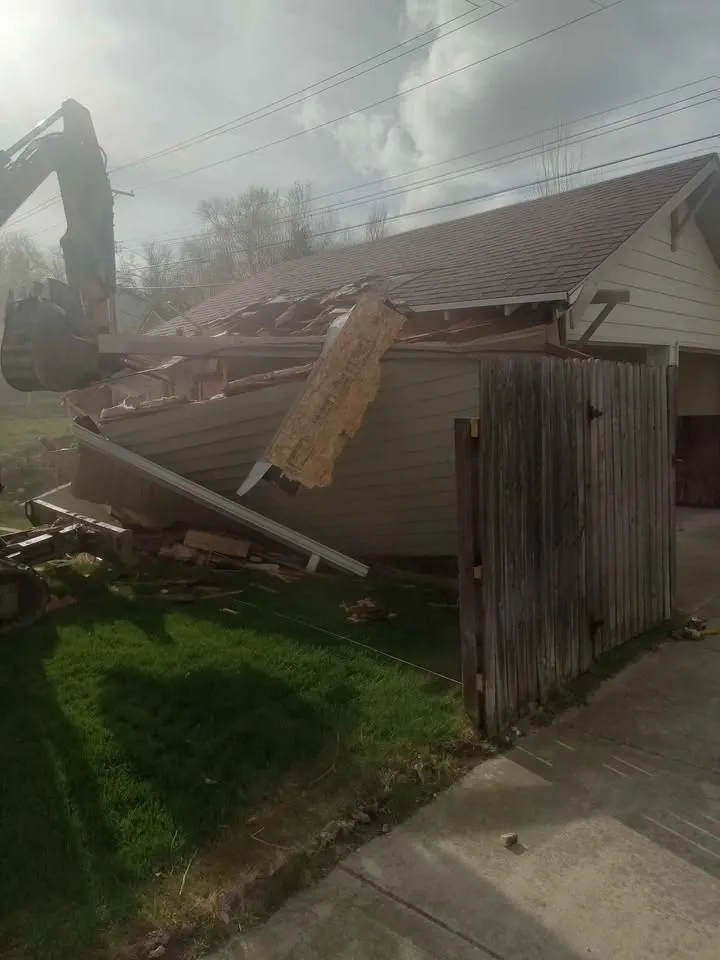
- Take the house down inward, away from the neighbour's side.
- Remove material close to shared fences by hand where needed.
- Keep bins, trucks and stockpiles off neighbouring driveways.
- Photograph shared fences and walls before work begins.
Trees near the line
Trees on the neighbour's side can have roots under your lot, and boundary trees belong to both of you. Oakville's tree protection rules cover them, so they're usually in the arborist's plan with hoarding and root-zone protection.
A neighbour's tree can also hang over your lot, and its branches may be in the way of the machine. Pruning branches that cross the line should be discussed with the neighbour first, and larger cuts may need an arborist. It's far better than a branch torn off by an excavator arm, and it keeps the relationship on good terms for the whole build.
Noise, dust and the street
Oakville allows construction noise from 7 a.m. to 7 p.m. Monday to Saturday, and not on Sundays or statutory holidays. Dust from breaking masonry and concrete is controlled with water. The road in front should be swept at the end of each day, and the sidewalk kept clear.
Vibration is the other thing neighbours sometimes feel, especially when concrete and masonry are being broken. Using the right size of equipment and breaking material in manageable pieces keeps it down. If a neighbour's house is very close, it's worth discussing extra precautions at the site visit.
When it makes sense to bring in a professional
If the house is close to a neighbour's wall, has shared fences, or sits among mature trees, it's worth having your demolition contractor walk the lot with those in mind. It's also sensible if a neighbour has raised concerns, because a clear plan is reassuring.
Our residential demolition crews plan every teardown around the houses beside it, and our garage demolition work often happens right beside shared fences.
Keep the neighbours updated if the plan changes, too. If the loud days move, or the builder's crew is arriving sooner than expected, a quick message keeps the goodwill you built at the start.
Bottom line
Tell the neighbours, protect the lines, respect the trees, keep to the hours and keep the street clean. It's simple, and it makes a real difference. Bolan Group Demolition Oakville plans for the neighbours on every job. Request a free estimate.
Frequently asked questions
- Should I photograph the neighbours' property first?
- It's a good idea to photograph shared fences and walls on your side before work starts, so everyone has a clear record.
- What if a neighbour's fence is damaged?
- Raise it with your contractor right away. Taking material down inward and working by hand near the line helps prevent it.
- Can the crew work on Sunday?
- Not in Oakville. Construction noise is not permitted on Sundays or statutory holidays.
- Will there be dust?
- Some, mostly during breaking. Water is used to keep it down.
- Can a bin go on the road?
- Bins are normally placed on your driveway. Anything on the road may need town permission.