
Permits and rules
Do I need a road occupancy permit for a bin or excavator on an Oakville street?
- road occupancy permit
- bin
- Oakville
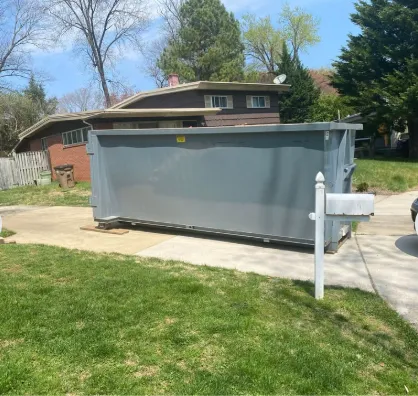
Yes, if anything sits on the road or boulevard, or crosses the sidewalk and curb, such as a bin placed on the street, a truck loading from the roadway or an excavator tracking over the curb. If everything stays on your private driveway, a road occupancy permit is not needed.
The details depend on which road your lot fronts and where the equipment needs to be, so it is worth sorting out before the demolition date is set.
What the permit covers
The road allowance in front of a house is more than the pavement. It usually includes the boulevard, the sidewalk and the curb, and it belongs to the municipality. A road occupancy permit from the Town of Oakville allows temporary use of that space for things like:
- A bin or container placed on the road.
- Trucks parked or loading on the street for an extended time.
- Equipment crossing or sitting on the boulevard or sidewalk.
- Barricades or fencing that extend past the property line.
Protecting the sidewalk and curb
When an excavator or loaded truck crosses the sidewalk and curb, the concrete can crack or chip. Protective material is laid down at one agreed crossing point, and the crossing is used every time. Damage to Town property is generally the owner's responsibility to repair, so protection is cheaper than repair.
Regional roads are different
Some Oakville lots front a Regional road, such as Trafalgar Road or Dundas Street. On those roads, Halton Region rather than the Town manages the road allowance, so the permit and any conditions come from the Region. Check which authority owns the road in front of your lot before applying.
Keeping the road clean
Whoever holds the permit, the road is expected to be kept clear of mud and debris. Trucks leaving a demolition site can track soil onto the street, and it ends up in catch basins after the next rain. Sweeping at the end of each day, and more often in wet weather, is part of the job.
Where the bin goes if the driveway stays
The easiest way to avoid a road occupancy permit is to keep the bin on the driveway. That does not always suit the plan, especially when the builder wants the driveway protected as a working pad. Our driveway and lawn guide covers those trade-offs.
If the bin has to go on the street, the permit sets out where it may sit and what markings or lights it needs.
What Bolan does about it
At the site walk, we look at where equipment and bins can sit and tell you whether a road occupancy permit is likely to be needed, and from which authority. Where it is, we help arrange it and follow its conditions on site, including protection at the curb and a swept road. That is part of every residential demolition, and it applies equally to bins used for junk and debris removal. Request a free estimate to go over your street.
Frequently asked questions
- Can I put a bin on the street in front of my Oakville house?
- Only with a road occupancy permit. The street, boulevard and sidewalk belong to the Town of Oakville, or to Halton Region on a Regional road, and placing a bin there needs their permission. If the bin can sit fully on your driveway instead, no road occupancy permit is required for it.
- Does an excavator crossing the curb need a permit?
- It can. Equipment crossing the sidewalk and curb is using the road allowance, and the Town may require a permit and protection of that surface. The simplest approach is to plan one protected crossing point and confirm with the Town what applies before the machine arrives on site.
- Who issues the permit on Trafalgar Road or Dundas Street?
- Halton Region, since those are Regional roads. The Region manages its own road allowance and sets its own conditions for bins, trucks and equipment. For local streets, the Town of Oakville issues the permit. Confirm which authority owns the road in front of your lot before applying.
- Who fixes a sidewalk damaged during demolition?
- Damage to the sidewalk, curb or boulevard is generally the owner's responsibility, and the Town can require repair. That is why protective material is laid where equipment crosses and why the crossing point is agreed in advance. Photos of the sidewalk before work starts are also useful to have on file.