
Planning
How is a teardown sequenced with the builder on a rebuild lot?
- teardown
- custom builder
- rebuild
A teardown on a rebuild lot follows the builder's permit, not the other way round: the new-house permit comes first, then utility disconnections and the demolition permit, then the demolition, and then the lot is handed to the builder for excavation. The demolition itself is often only a few days of a much longer schedule.
Getting the order right avoids a lot sitting idle or a crew waiting on paperwork. Here is the usual sequence in Oakville.
Design and permits
The builder or architect prepares the new-house drawings and applies for the building permit. In Oakville, the demolition permit for a residential replacement is issued only when the new building permit is ready to be issued. Both applications can move together.
If trees are involved, the arborist report and tree permit usually go in at the same stage. Heritage properties add a heritage review before this.
Surveys and disconnections
While permits are in review, the owner arranges:
- The designated substance survey required under OHSA section 30.
- Asbestos abatement under O. Reg. 278/05, if the survey finds it.
- Disconnection of gas by Enbridge, which should be requested early.
- Hydro meter removal by Oakville Hydro and water and sewer work by Halton Region.
Demolition
Once the permit is issued and the clearances are signed, the demolition crew mobilises. Tree hoarding goes up, the house comes down, materials are separated and hauled, and the foundation is removed or left to the builder's instructions.
Handover to the builder
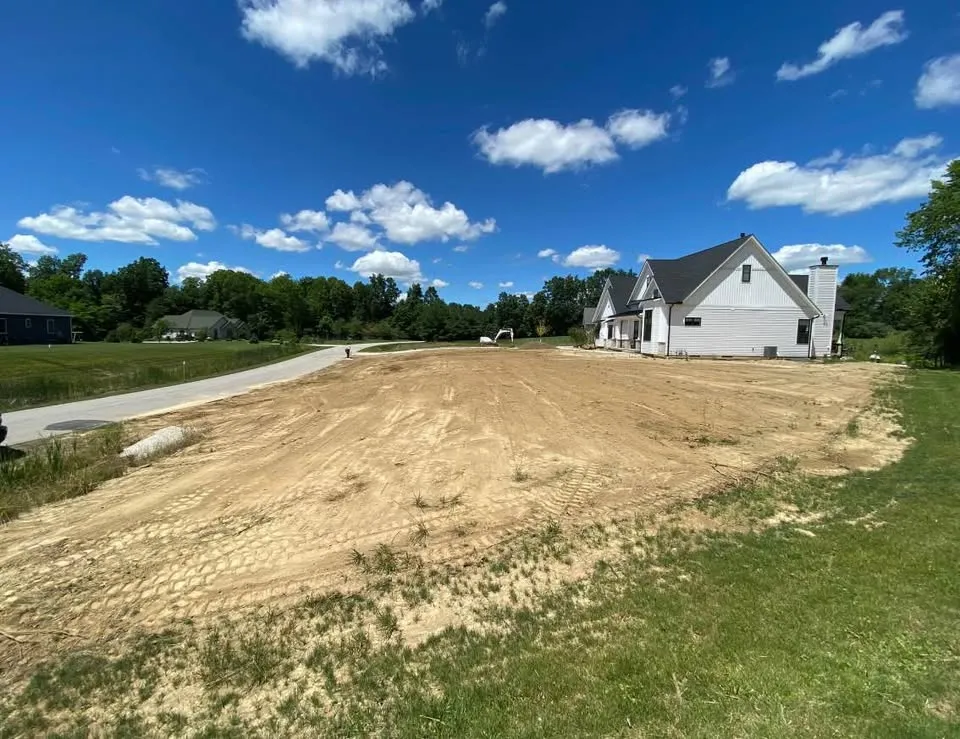
The handover condition should be agreed in writing. Some builders want the foundation removed and the hole left open for their excavator. Others want it backfilled and graded so the surveyor can stake the new house. Either is fine, but it needs to be decided before demolition day.
Common delays and how to avoid them
The demolition crew is usually ready long before the paperwork is. When a date slips on a rebuild lot, it is rarely the teardown itself that caused it. It is almost always one of the steps that has to happen first, and most of them can be started much earlier than owners expect.
Most schedule problems on rebuild lots come from a few familiar places:
- Gas disconnection booked too late, which holds up the clearance form.
- Asbestos found late because the survey was not done early.
- Tree permits or arborist reports missing from the permit package.
- Handover condition not agreed, so the builder's excavator arrives to the wrong site.
- Neighbours not told about access, bins or the loudest days.
What it depends on
The sequence depends on how quickly the new-house permit moves, utility scheduling, whether abatement is needed and any heritage or tree review. The demolition date is usually the last thing to be fixed.
What we do about it
We coordinate directly with your builder so the handover condition matches their plan. Our residential demolition crews take the house down, and our site clearing work leaves the lot graded when that is what your builder needs. Get a free estimate once your drawings are underway.
Frequently asked questions
- Who hires the demolition contractor, me or my builder?
- Either works. Some owners contract directly, others let the builder include it. The key is that the handover condition is agreed with the builder.
- Should the foundation come out during demolition?
- Usually yes, unless the builder wants to remove it with their own excavation. Agree this in writing beforehand.
- Can the demolition happen before the new permit?
- Not for a residential replacement in Oakville. The demolition permit follows the new-house permit.
- When should I call Enbridge?
- As early as possible. Enbridge only signs the clearance once the gas disconnection is complete.