Teardowns
Teardowns on Oakville ravine lots: slopes, setbacks and where the excavator can go
- ravine lot
- teardown
- Conservation Halton
Ravine lots are some of the most sought-after properties in Oakville. The trees, the privacy and the view out the back are exactly why people buy them. They are also why tearing down the old house takes more thought than it would on a flat street lot.
The house sits near the top of a slope that you can't simply drive a machine onto. Here's how a teardown is planned when the back of the lot drops away.
Why the back of the lot is off limits
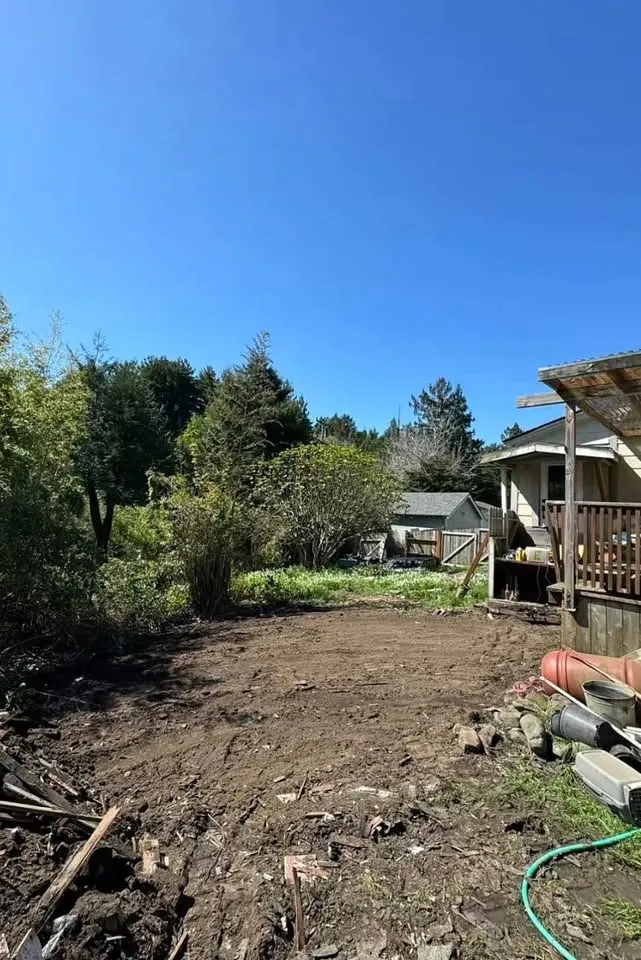
Many lots along Sixteen Mile Creek, Fourteen Mile Creek and Morrison Creek back onto valley slopes that fall within Conservation Halton's regulated area. Work there may need Conservation Halton approval, and our guide on Conservation Halton and Oakville teardowns explains how to check.
Even outside that approval, the slope itself matters. Heavy equipment near the top of a bank adds load and vibration, and disturbed soil erodes quickly. The safest rule is to keep machines and stockpiles well back from the edge.
Positioning the machine
On a ravine lot, the excavator works from the street side and pulls the house toward itself, rather than pushing material toward the slope.
- The machine sits on the front or side of the lot, on stable ground.
- The rear walls come down inward, into the footprint of the house.
- Nothing is dumped, stockpiled or tracked toward the top of bank.
Silt fencing and trees at the top of bank
A line of silt fence along the top of the slope catches runoff before it carries soil into the ravine. Tree protection hoarding usually runs close to the same line, since the trees at the edge are often what holds the bank together. Oakville's Private Tree Protection By-law applies here, and our tree guide explains how.
Walkout basements on sloped lots
Many ravine houses have a walkout at the back, which means the foundation is taller on the low side. Taking it out needs care, because that rear wall is often retaining soil on the slope side.
The wall is broken out in sections from the inside of the footprint, with the builder's or engineer's input on how much to remove and how the grade is left. Our foundation removal page covers the general approach.
Where debris is staged
Debris is gathered at the front of the lot, close to where trucks load, and hauled away often so piles never build up near the back. Metal, wood and concrete are sorted in that same front area.
When to bring in a professional
Any ravine lot deserves an engineer's opinion if the slope looks steep, shows past erosion, or the new house will sit closer to the edge. Bring in a demolition crew that has worked on sloped lots before and will plan around the regulated area rather than guess at it.
Working with the slope, not against it
A ravine teardown is slower at the back and more careful at the edges, and that is what protects the view you bought the lot for. Bolan Group Demolition Oakville plans every residential demolition on a sloped lot around these limits. Request a free estimate and we will walk the top of bank with you.
Frequently asked questions
- Can an excavator work at the back of a ravine lot?
- Usually not close to the slope. Machines near the top of bank add weight and vibration, and much of that area may be regulated by Conservation Halton. The crew normally works from the front or side of the lot and pulls the house inward, so the back of the property stays undisturbed.
- Why is silt fence needed on a ravine teardown?
- Bare soil from a demolition washes easily in rain. On a ravine lot, that runoff heads straight down the slope toward the creek. Silt fence along the top of bank traps sediment on the lot, protecting the slope, the watercourse and the neighbours below from mud and erosion.
- How does a walkout foundation come out safely?
- The rear wall of a walkout often holds back soil on the slope side, so it is removed in sections from inside the footprint rather than knocked outward. The builder or engineer should confirm how much comes out and how the grade is left, especially if the new house uses a similar walkout.
- Do trees at the top of the slope have to stay?
- Often they do, because they help stabilise the bank and may be protected under the Town of Oakville's Private Tree Protection By-law or within Conservation Halton's regulated area. Check with both before planning any removal, and keep protection hoarding in place during the demolition.