Service
Fire and Water Damage Demolition in Oakville
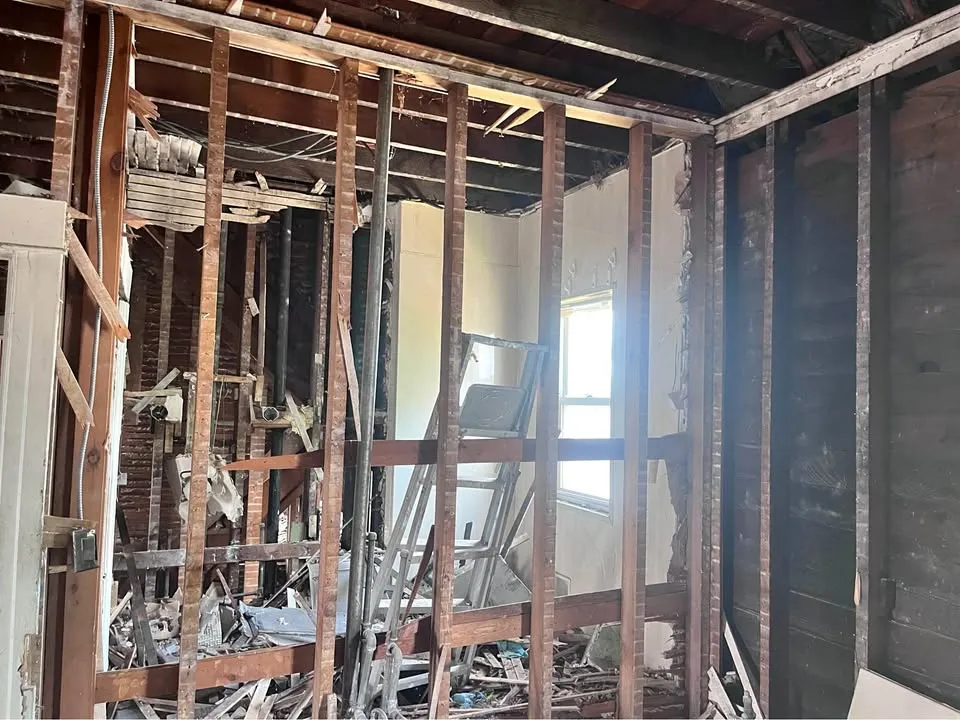
After a fire, flood or burst pipe, damaged drywall, insulation, flooring and framing have to come out before a house can be dried, cleaned and rebuilt. Fire and water damage demolition is that tear-out, done so the restoration contractor and the adjuster can see exactly what is left.
We do this work for restoration contractors, insurers and homeowners across Oakville and Halton. It is a specialised form of our interior demolition service, with extra attention to safety, containment and records.
What's included
- Removal of wet or burned drywall, plaster, insulation and ceilings
- Flooring, subfloor, cabinets and trim taken out where damaged
- Containment with poly barriers to keep debris out of unaffected rooms
- Tear-out to the lines set by the restoration contractor or adjuster
- Photo records and a written scope of what was removed
- Debris bagged and hauled, and the affected area swept
How the job runs
Safety check
We confirm the house is safe to enter; where fire reached the framing, an engineer assesses it first.
Scope agreed
The restoration contractor or adjuster sets the tear-out lines, and we confirm them on site.
Containment
Poly barriers and floor protection go up between damaged and undamaged areas.
Tear-out
Damaged materials come out from the ceiling down and are bagged as they go.
Documentation
Photos are taken before, during and after, and matched to the written scope.
Handover
Debris is hauled, floors are swept and the space goes to the drying or restoration team.
Before we start
Power, gas and water to the affected area should be made safe by the utilities or licensed trades, and an engineer should look at any framing touched by fire before a crew works beneath it.
Many damaged houses were built when asbestos was still used in plaster, joint compound and flooring. The owner's duty under OHSA section 30 to identify designated substances before arranging the work applies to restoration jobs like any other, and anything identified is removed by a qualified abatement contractor under O. Reg. 278/05 before our tear-out. We do not perform abatement.
We document what we remove for the adjuster but do not advise on coverage; that conversation stays between you, your insurer and your adjuster.
If the house is a loss and has to come down, the permit goes through Town of Oakville Building Services and our residential demolition team takes it from there; the Town requirements guide explains the process.
Photos from our jobs
Interior demolition Interior demolition Interior demolition Interior demolition Interior demolition Interior demolition
Questions we hear
- What do you document for the insurance adjuster?
- We photograph each area before tear-out, during the work and after it is cleared, and keep those records with the written scope listing what was removed and where. That gives the adjuster and the restoration contractor a clear, shared picture. We do not comment on what a policy covers; that is between you and your insurer.
- When does a damaged house need a full teardown instead?
- When the damage is severe enough that the insurer, the engineer and the owner decide the house is a loss, repairing it no longer makes sense. At that point the job becomes a full residential demolition with its own permit and disconnections. We can move from a partial tear-out to a teardown without changing crews.
- How do you keep smoke residue and debris out of undamaged rooms?
- We build containment with poly sheeting and taped seams between the damaged area and the rest of the house, cover floors along the path out and bag debris inside the contained area. Doors to finished rooms stay closed. The aim is that nothing we remove ends up adding to the cleaning work elsewhere in the home.
- Can you start quickly after a flood?
- We answer calls 24/7 and schedule the work once the house is safe to enter and the scope is agreed. Wet materials should come out promptly to limit further damage, so it helps to have your restoration contractor or adjuster available to confirm the tear-out lines when our crew arrives on site.
Talk to us about your project
Tell us what needs to come down and where. We'll arrange a site visit and send you a written scope. Calls are answered 24/7.
WSIB clearance on record. $5M commercial general liability coverage. Established 2006.