
Teardowns
How is dust controlled during a house teardown in an Oakville subdivision?
- dust control
- neighbours
- teardown
With water. The structure is wetted as it comes down and the debris is wetted as it is loaded, while the crew watches the wind and keeps an eye on the neighbours' pools, cars and open windows.
In a subdivision, where houses sit close together, that attention matters as much as the hose.
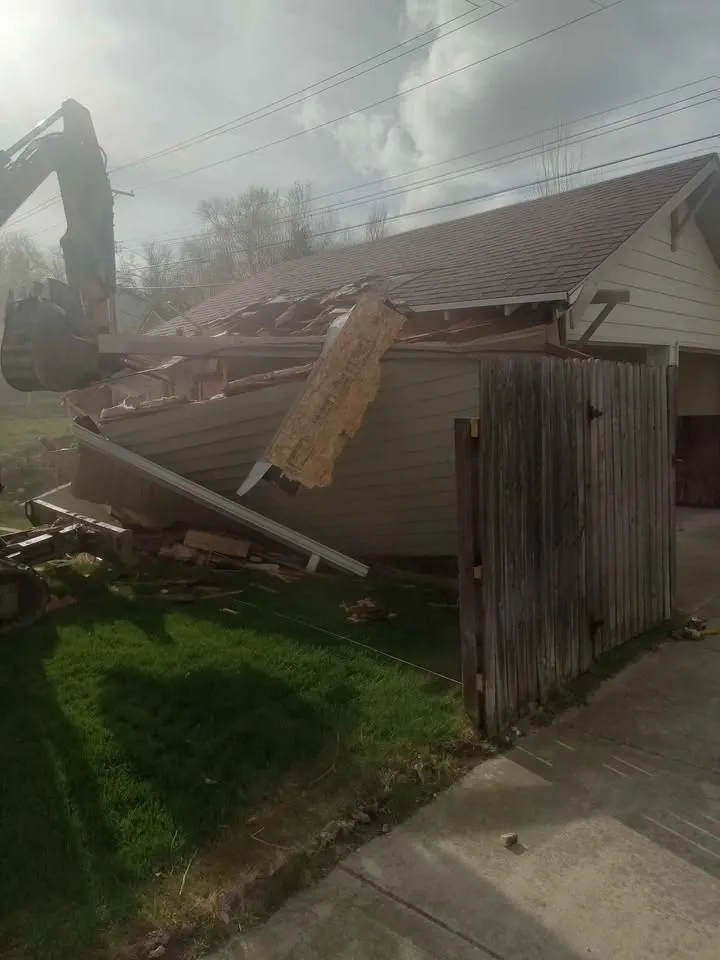
What makes the dust
Most demolition dust comes from dry, brittle materials breaking apart:
- Drywall and plaster as walls and ceilings come down.
- Brick, block and mortar as exterior walls are broken.
- Soil and fine debris stirred up by the machine and trucks.
Wetting at the machine
A crew member sprays water where the excavator is working, soaking the material just before and as it breaks. Debris piles are wetted again before they are loaded. The goal is to keep material damp enough that it falls as clumps rather than rising as a cloud, without flooding the lot or neighbouring yards.
Stopping for high wind
On a very windy day, even wet material can throw dust across property lines. When gusts are blowing straight toward neighbouring homes, the crew slows down, changes the order of work or pauses until conditions settle. That judgment call is part of every demolition day.
Covering loads
Trucks and bins leaving the site are covered or tarped so dust and debris do not blow off on the road. The road in front of the lot is swept regularly so dried mud does not turn into dust from passing traffic.
Telling the neighbours in advance
A short note or a knock on the door before demolition day lets neighbours close windows, move cars and cover pool equipment. Our explainer on protecting the neighbours' property goes further into fences, driveways and trees. Work runs within the hours set by the Town's Noise By-law, which our noise guide explains.
Asbestos is not a dust-control matter
Wetting keeps ordinary construction dust down, but it is not how asbestos is handled. Asbestos is identified by the owner's designated substances survey and removed by a qualified abatement contractor before demolition begins. Our guide on tearing down a house with asbestos siding or stucco explains that sequence.
What Bolan does about it
On every teardown, we bring water to the site, wet the structure and debris as we work, watch the wind, cover loads and sweep the road. We talk to neighbours before we start and give them a number to call. That applies to full residential demolition and to structural demolition where part of a house is coming down. Request a free estimate to plan your job.
Frequently asked questions
- Where does the water for dust control come from?
- Usually from a hose connection on the property, arranged before the water service is disconnected, or from a tank brought to site. The crew uses enough to keep material damp without flooding the lot or sending runoff into neighbouring yards or the storm drain.
- Should neighbours close their windows during a teardown?
- It helps, especially on the main demolition days. Telling neighbours in advance lets them close windows, move cars from the street and cover pool equipment or patio furniture. A friendly note with a contact number goes a long way toward keeping everyone comfortable while the house comes down.
- Does wetting stop asbestos dust?
- Wetting is for ordinary construction dust. Asbestos is not managed by dust control on a teardown; it is identified in the owner's designated substances survey and removed by a qualified abatement contractor before demolition starts. The crew does not begin until that work is complete.
- What happens if it is too windy to work?
- The crew slows down, changes the order of work to keep dust away from the most exposed neighbours, or pauses until the wind drops. Pushing ahead in strong wind would send dust across property lines even with water, so the crew makes that call on the day.