Planning
Fire and water damage demolition in Oakville: what comes out and what stays
- fire damage
- water damage
- restoration
Nobody plans for this one. A kitchen fire, a burst pipe in January, a basement that took on water in a storm: suddenly you have a house that needs to be opened up before it can be put back together.
The tear-out is only one part of the recovery, but it sets up everything that follows. Here's how it works, and how to tell what should come out and what can stay.
Make the structure safe first
Before anyone starts removing materials, the house has to be safe to work in. Power, gas and water to the affected areas are shut off or made safe by the utilities and licensed trades. Where fire has reached the framing, an engineer should assess the structure and say whether temporary support is needed.
The survey duty still applies
Damage does not change the owner's responsibilities. On an older house, the designated substances survey required under OHSA section 30 still has to be done before the work is arranged. If asbestos or another listed substance is found in damaged plaster, joint compound or flooring, a qualified abatement contractor removes it under O. Reg. 278/05 before general tear-out.
Working with the restoration contractor and adjuster
Most fire and water jobs involve a restoration contractor and an insurance adjuster. The demolition crew works to the scope they agree on and keeps clear records:
- Photos of each area before, during and after removal.
- A written list of what was removed and from where.
- Notes on anything found behind walls that changes the scope.
Back to sound material
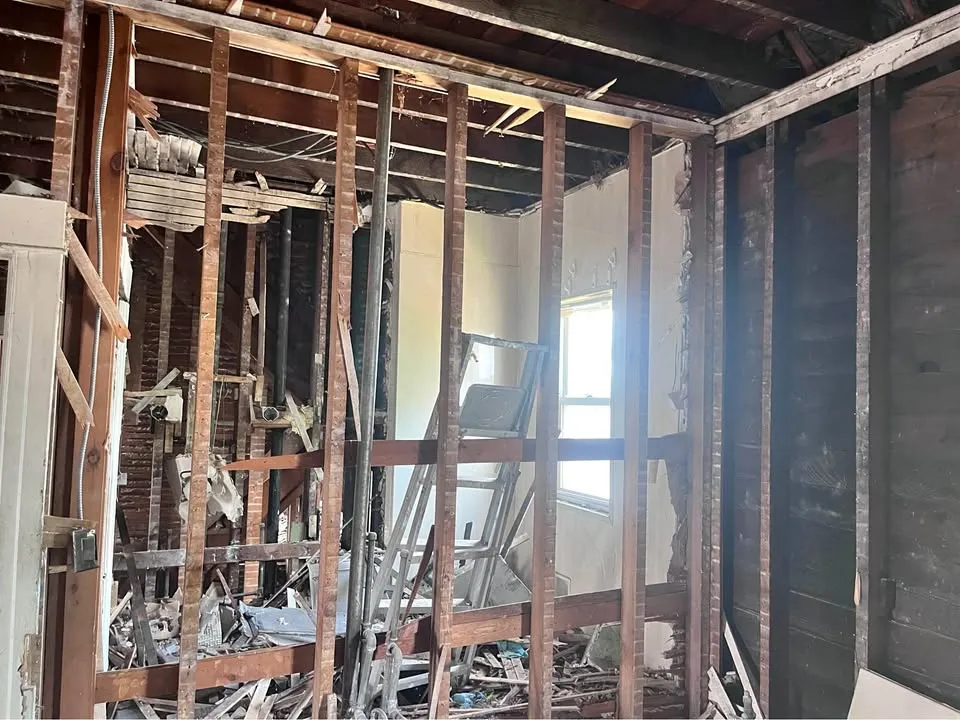
The goal is to remove damaged finishes until only sound material is left. Where that line falls depends on the type of damage and the restoration contractor's direction:
- Wet drywall and insulation are usually cut back past the wet area.
- Charred framing is assessed by the engineer; some is cleaned, some is replaced.
- Flooring and subfloor come out where they are soaked or burned through.
Smoke residue, wet materials and containment
Smoke residue and wet debris travel easily through a house. Poly barriers with taped seams separate the work area from undamaged rooms, floors along the path out are covered, and debris is bagged inside the containment. Wet materials are removed promptly so the drying team can start.
When the house is a total loss
Sometimes the damage is too extensive to repair. When the insurer, the engineer and the owner agree the house is a loss, the job becomes a full teardown with its own permit and utility disconnections. See our residential demolition page for how that works.
When to bring in a professional
Always. Fire and water damage involves structural questions, hidden hazards and insurance records that need people who do this regularly. Call your insurer first, then a restoration contractor, and bring in a demolition crew that is used to working with both.
Clearing the way to rebuild
A careful tear-out makes the rest of the recovery faster and clearer for everyone. Bolan Group Demolition Oakville handles this through our fire and water damage demolition service, which builds on our interior demolition work. Request a free estimate when you are ready.
Frequently asked questions
- How do you decide how much drywall to remove after a flood?
- The restoration contractor usually sets the line based on moisture readings and how high the water reached. Drywall and insulation are cut back past the wet area so the wall cavity can dry fully. The crew follows that line and records it in photos, so the adjuster can see exactly what was removed.
- Can charred framing be left in place?
- Sometimes. Lightly charred framing may be cleaned and kept, while deeply burned members usually need replacing. An engineer should make that call, especially where the framing carries load. The demolition crew removes what the engineer and restoration contractor identify and leaves the rest untouched.
- Does the demolition crew talk to my insurance adjuster?
- The crew provides records the adjuster can use, such as photos and a written scope of what was removed. Questions about coverage are between you, your insurer and your adjuster. The crew's job is to do the agreed work and document it clearly, not to advise on the claim.
- What if asbestos is found in the damaged area?
- Work in that area stops. If the designated substances survey identifies asbestos, a qualified abatement contractor removes it under O. Reg. 278/05 before general tear-out continues. Damaged older plaster, joint compound and floor tile are common places to find it in houses of a certain age.