
Teardowns
Where the excavator, bin and trucks go on an Oakville teardown lot
- site logistics
- teardown
- neighbours
Picture your lot on demolition morning. An excavator needs somewhere to sit, a bin needs somewhere to land, and trucks need to get in, load and leave without blocking the street. All of that has to fit on a residential lot that was designed for two cars and a lawn.
Most of the planning happens long before that morning, on a short walk around the property. Here's what gets decided and why.
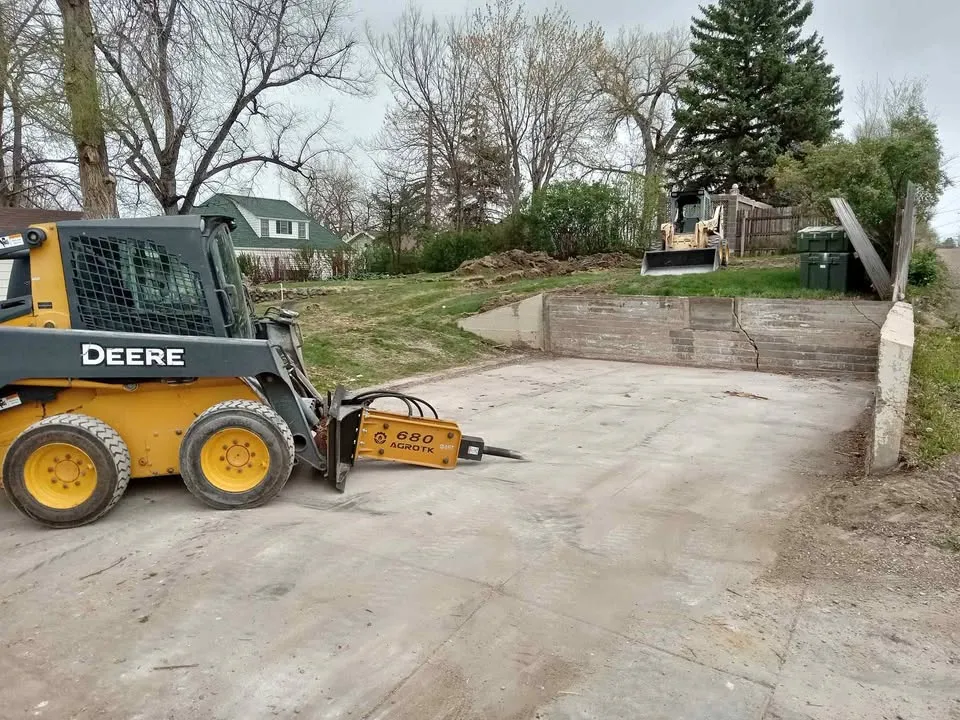
The site walk sets the layout
Before any date is booked, the crew walks the lot with the owner or builder and sketches out where everything goes.
- Where the excavator sits to reach the whole house without moving onto trees or neighbours' land.
- Where the bin or trucks load, and whether that is on the lot or the street.
- How trucks get in, turn and get out.
- Where debris is staged so metal, wood and concrete can be sorted.
Keeping the driveway as a pad
Many builders want the existing driveway left in place as a hard working surface for the rebuild. When that is the plan, the crew protects it and keeps the machine on it where possible. Our driveway and lawn guide covers the trade-offs in detail.
The boulevard, sidewalk and curb
The strip between the property line and the road belongs to the Town of Oakville. Equipment crossing the sidewalk or curb needs protection underneath it, and anything sitting on the road or boulevard needs a permit, which we explain in our guide on road occupancy permits.
Neighbours' driveways and the street during loading
A truck idling across a neighbour's driveway at the wrong moment can undo a lot of goodwill. Loading is timed so driveways stay clear, and trucks are not left parked on the street longer than needed.
- Neighbours on both sides get a heads-up about the start date.
- Mud and debris are cleaned off the road, not left for the rain.
- Work hours follow the Town's Noise By-law.
Fencing and the end-of-day condition
A teardown lot should be secure every evening. Temporary fencing keeps people out of the work area, open excavations are closed off, and loose material is gathered so nothing blows onto the neighbours' property. Equipment is parked with the keys out, and the street is swept before the crew leaves.
When to bring in a professional
If the lot backs onto a ravine, sits on a busy road or shares a tight side yard with the next house, the layout needs more than common sense. That is when an experienced demolition crew, and sometimes your builder's engineer, should be part of the site walk.
A quiet, organised site
Good logistics are mostly invisible: the neighbours notice less, the builder gets a clean handover, and the road stays open. Bolan Group Demolition Oakville plans this on every residential demolition and handles any leftover material through junk and debris removal. Request a free estimate to book a site walk.
Frequently asked questions
- Can the bin go on the street instead of the driveway?
- It can, but anything placed on the road or boulevard needs a road occupancy permit from the Town of Oakville, or from Halton Region on a Regional road. Many owners prefer to keep the bin on the driveway to avoid that step, but if the builder wants the driveway protected as a pad, a permitted street location may be the better choice.
- How is the sidewalk protected when the excavator crosses it?
- The crew lays protective material over the sidewalk and curb where the machine tracks in and out, and crosses at one agreed spot. That spreads the weight and keeps tracks from chipping the concrete. Any damage to Town property is the owner's responsibility, so protecting it properly is worth the effort.
- Will trucks block my neighbours' driveways?
- They should not. Loading is planned so trucks pull in, load and leave without sitting across anyone else's driveway. If a neighbour has a regular early departure or a medical need for access, telling the crew in advance lets them schedule loads around it.
- What does the site look like at the end of each day?
- Fenced, tidy and safe. Loose debris is gathered, open excavations are closed off, equipment is parked and locked, and the road in front is swept. The goal is that a neighbour walking past in the evening sees an organised work site, not a mess waiting for the morning.